
Why Canada and Qatar Cannot Afford to Settle for a Point in Vancouver

Canada and Qatar meet in a crucial Group B World Cup encounter at BC Place, with every team in the group tied on points and goal difference after the opening matches. The new tournament format normally allows for cautious play, but with a flat-line gridlock, another draw could prove fatal for either side's chances. Managers Jesse Marsch and Julen Lopetegui must embrace attacking strategies, particularly as Canada welcomes back Alphonso Davies to exploit Qatar's defensive setup. The match demands bold tactics, as playing it safe may leave both sides at risk of elimination.
- Group B is deadlocked after identical 1-1 openers.
- Conservative tactics risk elimination due to goal-difference chaos.
- Canada’s Davies returns, boosting their attacking strategy vs Qatar.
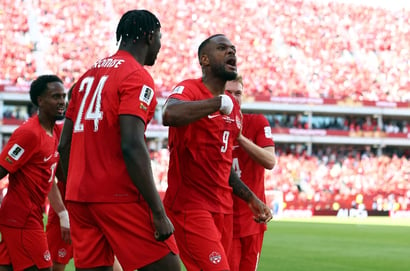
Canada and Qatar square off in their second Group B fixture at BC Place in what is shaping up to be a high-stakes psychological pressure clash.
It may look like a standard group-stage fixture, safely leaning towards a low-risk conservative affair, but an in-depth analysis of the table reveals an incredibly volatile competitive reality.
The opening fixtures in Group B produced mirror-image 1-1 draws. Co-hosts Canada battled back from a goal down against Bosnia and Herzegovina while Qatar snatched a 94th-minute equalizer via a Swiss own goal.
These results mean Group B sits in a state of absolute, flat-line equilibrium.
All four teams are deadlocked on exactly one point and a completely neutral zero-goal difference, effectively removing the luxury of a slow, calculated tournament build-up.
The Structure of the Flat-Line Trap
The new format of this year’s expanded 48-team World Cup means that the four best third-place teams can progress to the round of 32.
This gives managers some breathing room, allowing them to utilize conservative containment blocks to steadily secure qualification over three matches.
However, given the symmetrical results in the opening fixtures, that safety net may not be available this time.
Jesse Marsch and Julen Lopetegui must not approach this match with a “safety first” philosophy engineered to simply avoid defeat, as that could leave them in a precarious situation.
Settling for a second consecutive draw in Vancouver leaves a nation completely exposed to chaotic final-day goal-difference tiebreakers.
Switzerland and Bosnia and Herzegovina also clash in Los Angeles, and a decisive winner in that parallel fixture immediately shatters the gridlock.
The team that compromises for a passive point at BC Place will enter the final matchday under extreme pressure, knowing they must chase a mandatory victory against their toughest group opponent just to survive.
The Flank Chokepoint: Davies vs The Qatar Block
To break this strategic deadlock, Jesse Marsch is expected to unleash his primary tactical weapon.
Having sat out the opening match, Bayern Munich’s Alphonso Davies is set to return to the starting eleven, instantly reactivating Canada's high-velocity attacking identity.
Marsch’s blueprint centers on constructing severe, dynamic left-sided overloads. By pairing Davies' attacking runs with the inverted movements of Tajon Buchanan, Canada will look to aggressively trap Qatar's right-sided wing-back system.
This plan is designed to pull Qatar’s midfield lines apart.
If Pedro Miguel and Lucas Mendes slide too deep to contain Canada's left-wing velocity, they flatten out their own mid-block layout, creating immediate, vacant central passing corridors for Stephen Eustáquio to exploit and feed line-breaking balls directly into the feet of an onrushing Jonathan David.
The Midfield Suffocation Cage
The split-second possession flips, the tactical burden shifts to Canada's central engine room. Under Julen Lopetegui, Qatar do not seek to dominate territory, they absorb pressure before executing vertical transition sequences through Akram Afif.
To isolate this threat, Canada will deploy an aggressive, high-intensity counter-press led by Norwich City's Ali Ahmed and Porto's Stephen Eustáquio.
Instead of retreating into a passive defensive shape, Canada's double-pivot will be instructed to trigger immediate pressing cages if Boualem Khoukhi attempts to play out from the back.
By closing out the supply lines at the source, Canada can disconnect Afif from Almoez Ali, stalling Qatar's counter-attacking momentum before it ever crosses the halfway line.
Embracing Chaos in Vancouver
Thursday's Group B encounter between Canada and Qatar at BC Place will determine which manager has the competitive courage to abandon safety in pursuit of progression.
If Canada or Qatar treat this Matchday 2 clash with typical major-tournament caution, aiming to slowly settle for a draw, they risk falling entirely behind the curve in a historically congested pool.
The trap of the flat-line gridlock is that it renders defensive security completely obsolete. Jesse Marsch must utilize his home-field advantage and the return of Alphonso Davies to turn the match into a high-tempo offensive sprint.
Top Betting Sites
Betting offers
Upcoming Events
28 May 2026
- CDL 2026 Stage 4 Major Qualifiers -
- Esports
06 June 2026
- VALORANT Masters London 2026 -
- Esports
10 June 2026
- Volleyball Nations League 2026 -
- Volleyball
Load More
Today's Acca Tips
-
Soccer tips
-
Horse Racing tips
-
Tennis tips


