
What 24 Years of World Cup Openers Tell Us About Mexico vs South Africa

Mexico kicks off the 2026 World Cup against South Africa at Estadio Azteca, with statistical trends from past openers revealing three clear patterns: hosts rarely lose (only once since 2002), early goals are typical (92% have a first-half goal), and underdogs often outperform expectations (avoiding defeat in 50% of recent openers). The article recommends Mexico strike early to harness home advantage, while South Africa should stay compact and counter smartly. These recurring patterns suggest an unpredictable, dynamic start to the tournament.
- Hosts rarely lose World Cup openers, only one loss since 2002.
- Early goals are common; most openers see first-half scores.
- Underdogs avoid defeat in 50% of recent openers, markets may underestimate them.
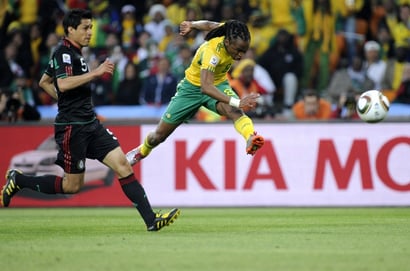
Mexico kick off the 2026 World Cup against South Africa on 11 June at the Estadio Azteca.
The opener carries an unusual statistical weight; it is the most-watched single match of the tournament, but it almost never plays out like a normal group game.
Look at every World Cup opener since 2002, and a pattern emerges. The host nation rarely loses. The first goal almost always arrives before half-time. And the underdog scoring first is not the freak event the markets price it as.
Every World Cup opener since 2002
| Year | Match | Score | First Goal | Host Result |
|---|---|---|---|---|
2002 | Senegal vs France | 1-0 | Bouba Diop, 30' | N/A (joint hosts) |
2006 | Germany vs Costa Rica | 4-2 | Lahm, 6' | Host won |
2010 | South Africa vs Mexico | 1-1 | Tshabalala, 55' | Host drew |
2014 | Brazil vs Croatia | 3-1 | Marcelo (OG), 11' | Host won |
2018 | Russia vs Saudi Arabia | 5-0 | Gazinsky, 12' | Host won |
2022 | Qatar vs Ecuador | 0-2 | Valencia (pen), 16' | Host lost |
*Six openers, six different stories, but three patterns hold up.
Pattern one: the host has lost once in the 21st century
FIFA records show the host nation never lost an opening match in the first 20 editions of the tournament. Qatar broke that record in 2022, becoming the first hosts ever beaten in their own curtain-raiser.
Mexico are at home, in front of a sold-out Azteca, with a coach who has been in this exact position before. The historical weight is enormous. The match is a public holiday in Mexico City, and El Tri have not lost a competitive home match in this World Cup cycle.
The Qatar precedent is now in the data, but Mexico are a categorically stronger footballing nation than Qatar was. The host-win baseline still applies.
Pattern two: first goals come early
Four of the last six openers produced a goal before the 17th minute. The 2010 fixture, the previous Mexico vs South Africa meeting, broke the pattern, with Siphiwe Tshabalala's left-foot finish arriving in the 55th minute.
The reason is nerves. Opening fixtures are not played with the tactical caution of a final group-stage match where teams know exactly what they need.
Players want to make a statement, coaches want to set a tournament tone, and that produces errors. The Russia opener in 2018 had three goals in the opening 45 minutes.
The 2014 Brazil match had two. Even Qatar conceded a 16th-minute penalty.
The average first-goal minute across the last six openers is roughly 22 minutes. Anyone expecting a cagey, scoreless half at the Azteca is fighting the data.
Pattern Three: The Underdog Is Often Closer Than the Odds Suggest
This is the part that gets missed. The World Cup opener has a long history of underdog goals:
In 2022, Ecuador (away from home, lower-ranked than Qatar in some models) won 2-0.
In 2010, South Africa (the underdog vs Mexico on neutral form) scored first and drew.
In 2002, Senegal beat reigning champions France 1-0.
Three of the last six openers saw the underdog either win or draw. The other three were comfortable host wins.
The reason this matters for Mexico vs South Africa is straightforward. Prediction markets price Bafana at 10.8% to win and roughly 20% to draw.
Historical opener data suggests the underdog secures at least a point in 50% of recent openers. There is a genuine mispricing if you believe the long-run trend over the home-crowd narrative.
What South Africa actually need to do
The blueprint is in the data. In every opener where the underdog took something from the match, they did the same three things:
- Scored before the host could settle, or absorbed pressure cleanly for the first 30 minutes.
- Stayed compact for the middle phase rather than chasing the game.
- Found one moment of quality in transition, Senegal had Diop's far-post finish, Ecuador had Valencia's set-piece movement.
Hugo Broos has the players for this template. Lyle Foster gives Bafana a focal point in the channels, and Relebohile Mofokeng is the creator behind him. Whether Broos picks a system that lets them play is another question entirely.
What Mexico need to do
Score first, score early, settle the crowd. Every host that has won the opener in the last 20 years was ahead by the 17th minute. The one exception lost.
If El Tri are level at half-time, the Azteca's anxiety becomes a tactical factor. Mexico are at their best when the noise is on their side and at their most vulnerable when expectation tightens around them.
The number to remember
92% of openers since 2002 have produced a first-half goal. 50% have seen the underdog avoid defeat. 83% have produced a host picking up a win or draw.
Three numbers, three different stories, and all three apply to what we will see at the Azteca when the 2026 FIFA World Cup gets underway on the 11th of June as Mexico play South Africa.


Top Betting Sites
Betting offers
Upcoming Events
15 October 2026
- 2026 League of Legends World Championship -
- Esports
19 October 2026
- WTA Ningbo -
- Tennis
- ATP Almaty -
- Tennis
- EuroLeague 2026/27 -
- Basketball
22 October 2026
- PARI Universe -
- Esports
Load More
Today's Acca Tips
-
Soccer tips
-
Horse Racing tips


