
The Changing Role of the NRL Fullback: How the Game’s Most Important Position Has Evolved

The role of fullbacks in the NRL has dramatically evolved from defensive custodians to pivotal offensive leaders. Modern fullbacks now dictate the pace of the game, acting as crucial playmakers from the first tackle. Their ability to make split-second decisions, execute precision passes, and maintain fitness throughout the match sets them apart. This shift in role demands a new skill set focused on creativity and leadership, promising a future where fullbacks are central to a team's success. As clubs adapt to these changes, the gap between elite and average fullbacks is expected to widen.
- NRL fullbacks have evolved from reactionary defenders to proactive playmakers.
- Modern fullbacks require ball-playing skills, speed, and fitness to lead effectively.
- Fullbacks are now creative leaders, essential to controlling and winning games.
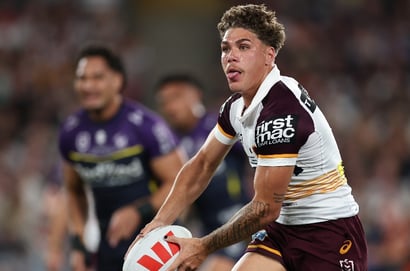
The Changing Role of the NRL Fullback: How the Game’s Most Important Position Has Evolved
- The Changing Role of the NRL Fullback: How the Game’s Most Important Position Has Evolved
- From Last Line of Defence to First Point of Attack
- Why Ball Playing Has Become Non Negotiable
- Speed, Fitness and the Rise of the Roaming Fullback
- Mistakes Are Now the Cost of Creativity
- What This Means for the Next Generation
Not that long ago, the fullback’s job was simple. Catch the ball. Defuse kicks. Chime into backline movements when space opened up. If you could do those things well, you were considered elite.
That version of rugby league no longer exists.
In 2026, the fullback is the most influential position on the field. NRL Stats prove they touch the ball more than any other player, dictate tempo, and often decide whether a team controls a game or simply survives it. The evolution has been gradual, but it is now impossible to ignore.
From Last Line of Defence to First Point of Attack
The traditional fullback was reactive. They responded to what unfolded in front of them. Today’s elite fullbacks are proactive. They shape attacking sets from the opening tackle and act as an extra playmaker rather than a support option. Well regarded stats analyst The Rugby League Eye Test’s 2025 NRL season advanced statistic leaders article gave great insight into this metric.
Players like James Tedesco changed the conversation years ago by demanding the ball early in sets and bending defensive lines through sheer work rate. That shift encouraged coaches to use fullbacks as strike weapons rather than safety valves.
Once that door opened, the position never went back.
Why Ball Playing Has Become Non Negotiable
Modern defensive systems are too structured to break down through simple block plays. Teams now rely on fullbacks to square up defenders and force indecision in the line.
This is where players like Dylan Edwards and Scott Drinkwater excel. Their ability to engage defenders and release outside runners has become just as valuable as their running metres. A fullback who cannot pass accurately under pressure is now a liability rather than a luxury.
As a result, junior development pathways are producing fullbacks who grow up playing halves or five eighth roles before shifting to the back. The skillset is changing from the ground up.
Speed, Fitness and the Rise of the Roaming Fullback
Another major shift has been the physical demands placed on fullbacks. The best in the game now cover more ground than forwards while maintaining explosive speed late into matches.
Reece Walsh is the clearest example of this evolution. He is not anchored to the backfield. He appears on both edges, sweeps through the middle, and still has the gas to defuse kicks on the final play.
This roaming role places enormous fitness demands on players, but it also maximises impact. Fullbacks are now involved in nearly every attacking sequence rather than waiting for the right moment.
Mistakes Are Now the Cost of Creativity
One of the biggest debates around modern fullbacks is mistakes. Errors are scrutinised more than ever, but they are also misunderstood.
Creative fullbacks take risks. They throw passes others would not. They run when the percentages say kick. The trade off is the occasional error. But coaches now understand that removing risk removes threat.
This is why elite players are backed to play instinctively. The upside of game breaking moments far outweighs the cost of the odd mistake, particularly in big games.
What This Means for the Next Generation
The next generation of NRL fullbacks will be developed differently. Clubs are no longer looking for safe custodians first. They want decision makers, communicators, and leaders.
Young players are being taught to read defensive numbers, manage ruck speed, and direct traffic. The fullback is becoming the on field extension of the coach.
As the role continues to evolve, the gap between elite and average fullbacks will only widen. Teams with genuine game controllers at the back will dominate possession, territory, and momentum.
The fullback position is no longer about finishing tries. It is about creating them, controlling games, and lifting everyone around you.
In 2026, the NRL belongs to teams whose fullbacks can think, run, pass, and lead. The rest are simply trying to keep up.

Ryan is an Australian sports content writer, producing insights and analysis for NRL, AFL and Basketball. He is also our YouTube host and presenter, can be found on Bets.com.au and is also a co-founder of The Sport Cap and The Basketball Fix.
From humble beginnings in Western Sydney growing up playing and refereeing Rugby League to running European wide Australian Rules Football tournaments there is a mountain of experience in between.
Multiple trips to North America has also deepened the love for the four major US sports and a continuing dream to catch as much live action as possible.
Stats and data analysis has now outgrown the hobby tag and the countless models and simulations are now being put to good use writing previews and predictions for NRL.
Read More
Upcoming Events
21 September 2026
- EMEA Masters 2026 Summer -
- Esports
24 September 2026
- VALORANT Champions 2026 -
- Esports
- EuroLeague 2026/27 -
- Basketball
28 September 2026
- WTA Beijing -
- Tennis
Load More
Today's Acca Tips
-
Soccer tips
-
Horse Racing tips
-
Tennis tips


