
Japan's Physical Evolution Could Be Key Against the Dutch in Group F clash

Historically viewed as physically outmatched by European teams, Japan enters the Group F game against the Netherlands with a modern transformation. The current squad features tall, agile defenders—such as Hiroki Ito, Ko Itakura, and goalkeeper Zion Suzuki—who can directly challenge European aerial superiority. This newfound parity lets Japan maintain an aggressive defensive line while freeing midfielders to control crucial spaces and transition quickly into attack. The key conclusion: Japan’s evolved physical profile and tactical flexibility now make them genuine equals to Europe’s best.
- Japan’s defensive lineup now matches European size and strength.
- Moriyasu’s side can hold a higher line & win aerial duels vs Netherlands.
- Physical evolution unlocks faster, dangerous counter-attacks for Japan.
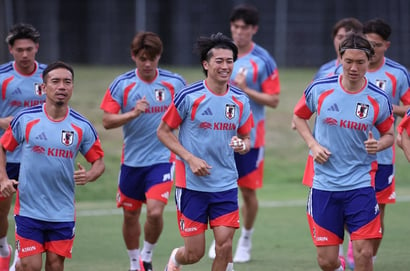
For decades, international football analysts approaching a major tournament clash between a European heavyweight and an Asian powerhouse have recycled a predictable narrative.
It is a surface-level premise that operates under the assumption that elite European physical stature, vertical leverage, and raw aerial dominance will inevitably bully and break a technically superior but shorter Japanese side.
When the historical templates are loaded for Sunday's Group F opener between the Netherlands and Japan at Dallas Stadium, casual observers will expect Ronald Koeman’s Oranje to look for a physical mismatch.
The assumption will be that towering targets like Virgil van Dijk, Brian Brobbey, or late-game battering ram Wout Weghorst can simply unbalance the Samurai Blue by raining direct long balls into the penalty box.
However, Hajime Moriyasu's modern roster does not fit the historical stereotype. Over the last four years, a quiet physical transformation has taken place across the country's development pipelines.
When Japan take to the pitch in their opening match at the World Cup in Texas, they will reveal a hyper-athletic, physically intimidating central defence engineered specifically to neutralize European size advantages on equal terms.
The New Giants of Tokyo: Deconstructing the Metric Shift
The most glaring erasure of the traditional size gap rests within Japan’s definitive defensive pairing. The days of converting undersized full-backs into auxiliary center-backs out of necessity are permanently over, with Moriyasu's backline anchored by genuine elite continental specimens.
Bayern Munich’s Hiroki Ito stands as a towering, left-footed 1.88m (6ft 2in) defensive shield who transitions effortlessly between central defense and the left flank. His partner is Ajax's equally imposing Ko Itakura (1.87m) or the recovery speed of Feyenoord's Tsuyoshi Watanabe (1.86m).
The foundation of this physical evolution is Parma shot-stopper, Zion Suzuki. Standing a massive 1.90m with an elite upper-body frame, Suzuki represents a radical departure from historical Japanese goalkeeping profiles.
Suzuki does not just sit on his line waiting for defensive protection; his physical attributes allow him to authoritatively claim crosses at their peak trajectory, single-handedly neutralizing the looping, deep deliveries that Koeman’s full-backs use to target the back post.
Neutralizing the Weghorst Trap
Tactically, having a tall, robust defensive spine completely rewrites Moriyasu’s out-of-possession blueprint.
In previous generations, when elite European teams introduced direct targets like Wout Weghorst past the 70th minute, Japan was forced to collapse into a panicked, frantic penalty-box scramble, relying on numbers rather than physical positioning to clear the ball.
In Dallas, Japan can maintain a far higher, more aggressive defensive line. Because Ito and Itakura possess the physical leverage to challenge Weghorst or Cody Gakpo directly in initial aerial duels, Japan's central midfielders do not need to drop deep to assist the center-backs.
Instead, Kaishu Sano can occupy strategic secondary spaces roughly 25 yards out from goal.
Their primary assignment is to immediately clamp down on second-phase ball clearances, preventing the likes of Tijjani Reijnders or Teun Koopmeiners from recovering loose balls in advanced shooting areas.
Turning Physical Resilience into Transitional Speed
By matching the Netherlands’ physical output, Japan unlocks their most dangerous asset, rapid vertical counter-attacks. When a team relies on size to win football matches, they inherently sacrifice agility and turning speed in transition phases.
The moment Ito or Itakura wins an aerial duel against a Dutch forward, the ball is immediately recycled on the deck to fluid creative hubs like Takefusa Kubo or Daichi Kamada.
The Japanese backline looks well-equipped to win these physical duels cleanly without committing extra midfielders to help.
This means the Blue Samurai can maintain an optimized numerical layout to initiate fast transitions, exposing the turning circles of an advancing Dutch side before their deep block can recover.
Top Betting Sites
Betting offers
Upcoming Events
04 April 2026
23 May 2026
- LPL 2026 Split 2 Playoffs -
- Esports
- LCS 2026 Spring Playoffs -
- Esports
28 May 2026
- CDL 2026 Stage 4 Major Qualifiers -
- Esports
Load More
Today's Acca Tips
-
Soccer tips
-
Horse Racing tips
-
Tennis tips


