
The Goal Machines and the Shut-Down Specialists of the 2026 World Cup

The 2026 World Cup is marked by a striking contrast: teams with attacking depth like England, France, and Portugal stand out for their prolific goal-scoring capabilities, while others such as Jordan, Qatar, and Tunisia are set to rely on strict defensive organization and patience. England leads with distributed scoring across its squad, making them highly unpredictable. Meanwhile, teams with fewer goals will look to discipline and tight scorelines to level the playing field, setting the stage for a tournament likely defined as much by its playing styles as its talent.
- 2026 World Cup features a stark divide: prolific attackers vs defensive squads.
- England, France, and Portugal have deep, balanced attacking threats.
- Low-scoring teams like Jordan & Qatar expected to focus on discipline and tight games.
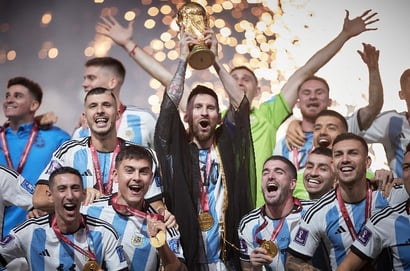
Few World Cups feature a clearer divide than the one emerging ahead of the 2026 tournament.
Some nations arrive with attacking depth capable of overwhelming opponents, while others appear built around defensive organisation, patience, and survival.
The Teams Built to Score
The strongest attacking squads are easy to identify. England lead the way with 258 goals across their squad, followed by France (220), Portugal (217), Brazil (215), Argentina (193), and Croatia (185).
These are not simply talented teams. They are squads with proven scoring depth, capable of generating goals from multiple positions rather than relying on one superstar.
England's profile is particularly impressive. Harry Kane's 65-goal season grabs the headlines, but the real story is that 15 England players have scored at least five goals, while no individual contributes more than 25% of the squad's total output.
That balance allows England to create danger from virtually every area of the pitch.
France and Portugal offer similar depth. France's attack is led by Kylian Mbappe, but supported by enough secondary scorers to remain dangerous regardless of who finds the net.
Portugal operate in much the same way. Cristiano Ronaldo's 50 goals remain vital, yet 16 players in the squad have scored at least five goals, making them one of the least predictable attacks in the field.
Brazil and Argentina may be perceived as more balanced than explosive, but their numbers still place them among the tournament's elite attacking sides.
Brazil's 215 goals are spread across 16 players with five or more goals, while Argentina's 193 combine Lionel Messi's influence with a strong supporting cast. Croatia, with 185 goals and 13 players on five or more, may be the most underrated attacking team in this group.
The Teams Built for Tight Games
At the opposite end sit the tournament's lowest-scoring squads. Curaçao arrive with 54 goals across their squad, Tunisia and Uzbekistan both bring 48, Iraq have 42, Qatar 32, and Jordan only 20.
Jordan are perhaps the clearest example of a low-scoring side. Their squad has produced just 20 goals, with Ibrahim Sabra responsible for half of that total. Qatar show a similar pattern, with Akram Afif accounting for 41% of the team's 32 goals.
Tunisia, Iraq and Uzbekistan all appear likely to rely on structure, discipline and patience rather than attacking volume. Uzbekistan at least possess Eldor Shomurodov, whose individual quality gives them a player capable of producing moments that exceed the team's overall scoring profile.
Curaçao present an especially interesting case. Despite drawing heavily from overseas-born talent, they still arrive with only 54 squad goals. The result is a globally connected team with a distinctly low-scoring identity.
A Tournament Defined by Contrasts
This divide between attacking powerhouses and low-output teams should shape much of the group stage.
The strongest attacking nations enter with enough depth to turn pressure into repeated scoring chances, while the lower-scoring sides are likely to depend on organisation, moments of quality and narrow scorelines.
England, France, Portugal, Brazil, Argentina, and Croatia look equipped for open, high-scoring matches. Jordan, Qatar, Tunisia, Iraq, Uzbekistan, and Curaçao appear better suited to tight contests where one goal can decide everything.
That contrast, as much as reputation or rankings, could become one of the defining themes of the 2026 World Cup.
Top Betting Sites
Betting offers
Upcoming Events
04 April 2026
23 May 2026
- LPL 2026 Split 2 Playoffs -
- Esports
- LCS 2026 Spring Playoffs -
- Esports
28 May 2026
- CDL 2026 Stage 4 Major Qualifiers -
- Esports
Load More
Today's Acca Tips
-
Soccer tips
-
Horse Racing tips
-
Tennis tips


