
10 World Cup Stars Who Could Have Played for Someone Else

The 2026 World Cup showcases a new era of global footballers with complex heritage and eligibility. Players such as Jamal Musiala, Folarin Balogun, and Alphonso Davies had genuine opportunities to represent different nations due to their diverse backgrounds or dual citizenship. Eligibility rules allow for remarkable 'what if' scenarios that could have shifted national football fortunes. This international flexibility highlights the evolving landscape of world football and the growing importance of player identity and federation decisions in shaping tournament lineups.
- Many 2026 World Cup stars could have played for other nations due to modern eligibility rules.
- Players' choices often reflect complex family history, birthplace, and youth careers.
- These decisions shape national team fortunes and showcase football's globalized nature.
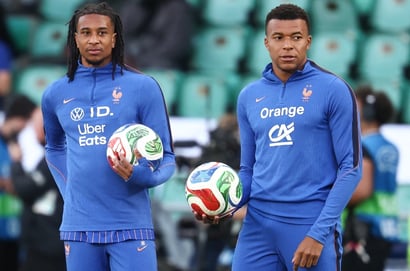
Kylian Mbappé, Jamal Musiala, Alphonso Davies, and Folarin Balogun; the 2026 World Cup is packed with players who had real choices over which flag to fly at the Mundial.
The modern eligibility rules mean a single goal in North America this summer might easily have belonged to a different country.
We are presenting 10 of the most striking “what could have been” stories at this World Cup, based on documented parentage, birthplace, or youth‑level caps.
1. Jamal Musiala (Germany – could have played for England or Nigeria)
Born in Stuttgart, raised for part of his childhood in England, and with a Nigerian father, Jamal Musiala is the poster boy for the multi‑national modern footballer. He came through Chelsea’s academy and represented England at youth level before committing to Germany at senior level, turning down a serious push from the FA.
In another timeline, he is threading passes through for England or Nigeria in the US this summer.
2. Leroy Sané (Germany – could have played for France or Senegal)
Leroy Sané’s father Souleymane is a former Senegal international, while Sané himself holds French citizenship and has been widely discussed as theoretically eligible for France through that connection.
Instead, the winger, born in Essen, chose Germany, where he was developed and capped early. France and Senegal both had arguments to make, but Germany moved quickest.
3. Malick Thiaw (Germany – could have played for Finland or Senegal)
Centre‑back Malick Thiaw was born in Düsseldorf to a Senegalese father and Finnish mother, and has held both German and Finnish passports.
That gave him three routes: Senegal via his father, Finland via his mother, and Germany, where he grew up. After bouncing between youth setups, he settled with Germany, but Finland, in particular, will always wonder what might have been.
4. Folarin Balogun (United States – could have played for England or Nigeria)
Balogun’s journey is peak 21st‑century football: born in Brooklyn to Nigerian parents, raised in London, and developed in Arsenal’s system. He represented England at youth level, while Nigeria also tried to bring him in as a senior international.
The USMNT eventually won the tug‑of‑war in 2023, and now he leads the line for the co‑hosts in a tournament where he could easily have been England’s or Nigeria’s No 9 in another timeline.
5. Tim Weah (United States – could have played for Liberia, Jamaica or France)
Tim Weah is football royalty: the son of Liberian icon and president George Weah. That alone gave him a strong case to represent Liberia. His mother is Jamaican‑born, and he spent substantial time in France through PSG’s academy, adding theoretical French eligibility into the mix.
In the end, he picked the USA, the country of his birth, but he might have been a standard‑bearer for at least two other nations in 2026.
6. Gio Reyna (United States – born in England, with Argentine and Portuguese roots)
Reyna was born in Sunderland while his father, former US international Claudio Reyna, was playing in the Premier League. That English birthplace theoretically opened the door to the Three Lions, while his father’s side brings Argentine‑Portuguese ancestry and his mother Irish‑American roots.
The US moved decisively and capped him young, but his family tree reads like a mini World Cup on its own.
7. Brahim Díaz (Morocco – could have remained with Spain)
Brahim Díaz was born in Málaga, represented Spain at youth level, and even made a senior appearance for La Roja before switching allegiance to Morocco. Under FIFA’s one‑time switch rules, he was able to change, as he hadn’t been locked in by competitive caps.
Spain could have had a creative 10 operating behind their striker; instead, Díaz now pulls the strings for the Atlas Lions.
8. Alphonso Davies (Canada – born in Ghana to Liberian parents)
Davies is Canada’s talisman, but his route to the Maple Leaf underlines how migration is transforming international football. He was born in a refugee camp in Ghana to Liberian parents before being resettled in Canada, where he eventually gained citizenship and came through Vancouver’s system.
Liberia and Ghana both had potential claims, but Canada offered stability and opportunity, and have been richly rewarded.
9. Erling Haaland (Norway – born in England)
Erling Haaland is the most famous “nearly English” international in the world. He was born in Leeds in 2000 while his father, Alf‑Inge Haaland, was playing there, which theoretically opened the door to England through birthplace.
Norway was always the more realistic route given his upbringing and family ties, but on raw FIFA rules, there is a plausible universe where England line up with Haaland as their No 9 in 2026.
10. Harry Souttar (Australia – born in Scotland)
Australia’s giant centre‑back Harry Souttar was born in Aberdeen and represented Scotland at youth level. His mother, however, is Australian, which made him eligible for the Socceroos.
After years in the Scottish system, he switched allegiance and quickly became a cornerstone of Australia’s defence. Given Scotland’s revival, his choice feels even bigger in hindsight.
Top Betting Sites
Betting offers
Upcoming Events
28 March 2026
- LEC 2026 Spring -
- Esports
04 April 2026
23 May 2026
- LPL 2026 Split 2 Playoffs -
- Esports
- LEC 2026 Spring Playoffs -
- Esports
- LCS 2026 Spring Playoffs -
- Esports
Load More
Today's Acca Tips
-
Soccer tips
-
Horse Racing tips
-
Tennis tips


