
Argentina Escaped One African Challenge but Egypt Presents a Far Greater Test

Argentina narrowly avoided a historic World Cup upset with a 3-2 extra-time victory over Cape Verde in Miami. Despite Messi’s brilliance and late heroics, the world champions exposed vulnerabilities: over-reliance on possession, left-side defensive gaps, and aerial weaknesses. With a high-stakes clash against a well-drilled, physically demanding Egypt on the horizon, Argentina must address these flaws and manage player fatigue. Coach Lionel Scaloni is urged to adjust tactics and ensure structural discipline if Albiceleste is to keep their title dreams alive.
- Argentina narrowly beat Cape Verde 3-2 in extra time, exposing major defensive flaws.
- Key tactical corrections are needed before facing a strong, disciplined Egypt team.
- Proper squad management and structural discipline are crucial for Argentina’s title defense.
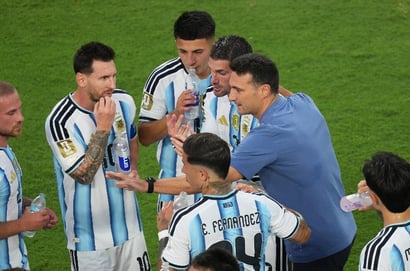
Argentina’s hard-fought 3-2 extra-time victory over tournament debutants Cape Verde in Miami was nearly the catastrophic centerpiece of the greatest upset in FIFA World Cup history.
Armed with a nation of just 500,000 people, the fearless Blue Sharks twice came from behind to more than ruffle the world champions in the sapping South Florida heat.
It required a 29th-minute moment of individual brilliance from Lionel Messi and a 92nd-minute strike from Lisandro Martínez just to keep the Albiceleste alive.
Ultimately, it took a 111th-minute corner delivery from Messi, met by a Cristian Romero header that deflected off Cape Verde's Diney Borges for an agonizing own goal, to punch Argentina's ticket to the next round.
Lionel Scaloni’s men survived the 120-minute marathon, but the difficult nature of the clash highlighted deep structural faults in the world champions' design.
As Argentina shifts its focus to the round of 16 clash against Egypt, they face an African giant far more clinical, positionally disciplined, and tactically lethal than Cape Verde.
To prevent an abrupt end to their title defense on Tuesday, Scaloni must rapidly address pressing issues from the Miami scare.
Albeceleste Must Avoid the Low-Block Complacency
Against Cape Verde, Argentina fell victim to the false comfort of their positional dominance. After Messi's exquisite opening goal, the midfield trio of Enzo Fernández, Rodrigo De Paul, and Alexis Mac Allister dropped their vertical passing tempo.
They fell into low-risk, horizontal safety recycling loops, completing a massive volume of side-to-side passes without actively attempting to unbalance the Blue Sharks' compact mid-block.
By treating a narrow 1-0 lead as a finished objective, Argentina allowed Cape Verde's veteran 40-year-old goalkeeper, Vozinha, to marshal his defense, execute 10 vital saves, and steadily build the belief that sparked Deroy Duarte’s shocking 59th-minute equalizer.
The Egypt Application
Hossam Hassan’s Egypt is meticulously structured to punish precisely this brand of possession laziness. The Pharaohs, who reached the last 16 after a highly disciplined penalty-shootout victory over Australia, operate out of a punishingly compact, low-variance block.
If Argentina goes a goal up and retreats into passive, horizontal ball-retention cycles, Egypt’s midfield enforcers, Marwan Attia and Hamdy Fathy, will comfortably absorb the tracking lines.
Unlike Cape Verde, who relied on intricate, collective overloads to engineer their way back into the match, Egypt possesses a world-class transitional outlet in Mohamed Salah and Omar Marmoush.
If Argentina gets lazy with the ball and lets their offensive concentration slip, a ball out to Salah or Marmoush against an unbacked, high-positioned defensive line will instantly dismantle their World Cup crown.
Fixing the Issues on the Left Side
The most troubling structural defect exposed on the Miami pitch was the severe lack of defensive coordination inside Argentina’s left side.
For Cape Verde's first equalizer, Deroy Duarte easily drifted completely unchecked across the face of the box to slot home a Ryan Mendes pass past a stranded Emiliano Martinez.
This tracking vulnerability was exacerbated by the knock to Lens defender Facundo Medina, which forced Scaloni to utilize Nicolás Tagliafico off the bench in the 85th minute.
While Tagliafico brings elite tournament experience, he does not offer Medina’s high-speed recovery sprints over wide, open spaces.
The Egypt Application
Egypt's offensive play under Hassan is tailored to target this exact vulnerability. While Salah acts as a massive gravity well drifting right and pulling entire backlines toward him, Omar Marmoush operates as a highly dangerous inside-left forward.
If Tagliafico and Lisandro Martínez do not establish tight, tracking lines inside the left half-space, Marmoush will comfortably mirror Duarte’s running lanes.
He will repeatedly cut inside to exploit the vacuum behind Argentina's double-pivot, generating clean shooting corridors or firing reverse to an onrushing Emam Ashour.
Managing the Aerial Threat
Cape Verde systematically threw Argentina's center-backs out of alignment by utilizing looping, deep diagonal crosses from wide positions.
The Blue Sharks routinely bypassed Argentina's midfield press by lofting balls over De Paul’s shoulders, forcing Cristian Romero and Lisandro Martínez into uncomfortable back-to-goal aerial duels.
Even after Lisandro momentarily restored the lead in the 92nd minute, Argentina's aerial tracking failed again in the 103rd minute.
Sidny Lopes Cabral was allowed to dance past a challenge and unleash a curling, right-footed missile into the top corner.
The match heavily degenerated into a chaotic, physical lottery where Argentina looked remarkably uncomfortable defending balls inside their own six-yard box.
The Egypt Application
Egypt presents an immensely physical, aerially dominant frontline that treats wide crossing volume as its primary goal source. Hassan’s team specializes in winning second-ball knockdowns inside the penalty area.
To prevent his team from getting pinned deep against their own goal line under a barrage of looping deliveries, Romero must fundamentally alter his tracking geometry.
He must step out of the low line early to challenge Egypt’s central aerial targets at their highest trajectory point.
By aggressively making physical contact before the ball drops into the six-yard box, Romero can disrupt the knockdowns from Egypt. This will ensure Martínez has clean lines to command his area.
Argentina’s Load Management Plan
The round of 16 clash between Argentina and Egypt at Atlanta Stadium will be decided by how effectively Lionel Scaloni manages his team’s physical energy levels.
Having endured a grueling extra-time match in Miami and losing an essential recovery session to a massive South Florida rainstorm, Argentina enters Atlanta experiencing severe metabolic load strain.
To survive a battle-hardened Egyptian side, Argentina cannot afford to chase the match through frantic pressing loops. They must prioritize structural restraint over cosmetic attacking expansiveness.
Albiceleste must utilize Lautaro Martínez as a traditional, back-to-goal central pinning wall to physically anchor Egypt's center-backs. This will forcefully create the deep, vacant intermediate pockets Messi requires to collect possession unmarked.
The world champions must control the game's pacing, restrict Egypt’s wide crossing lanes, and maintain absolute structural discipline through every phase of transition.
If this is done, they will successfully neutralize the Pharaohs' physical blueprint, ensuring their global crown survives another high-stakes knockout test.
Top Betting Sites
Betting offers
Upcoming Events
10 June 2026
- Volleyball Nations League 2026 -
- Volleyball
11 June 2026
28 June 2026
Load More
Today's Acca Tips
-
Soccer tips
-
Tennis tips


