
France Have Changed Since Munich but Will It Be Enough to Beat Spain?

France faces Spain in a highly anticipated World Cup semi-final, with both teams evolving significantly since their past encounters. Spain has proven to be France’s nemesis in recent years, prompting tactical changes under Didier Deschamps, including a move to a more dynamic lineup centered on Michael Olise. Key matchups include Manu Koné's battle against Spain’s midfield engine and tactical chess involving wide players like Dembélé and Cucurella. With Dallas Stadium’s fast-paced turf favoring both teams’ styles, bench management and adaptability will decide the match. France appears better equipped this time to challenge Spain’s dominance.
- France, after recent losses to Spain, has evolved tactically under Deschamps.
- Michael Olise and a dynamic new system power France’s attack and creativity.
- Match could hinge on bench depth and Dallas stadium’s unique fast turf.
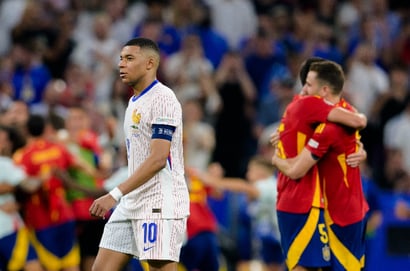
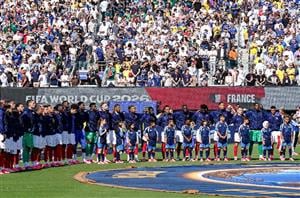
France and Spain square off in the semi-final of the FIFA World Cup as they continue their quest for glory.
The Spaniards appear to be the ultimate football Kryptonite for Les Bleus, having gotten the better of their rivals several times in recent years.
Luis de la Fuente’s side famously broke French hearts in Munich with a 2-1 Euro 2024 semi-final triumph and did it again in a chaotic 5-4 UEFA Nations League semi-final thriller in June 2025.
They even secured global glory by taking down a French team 5-3 in the Olympic final.
However, as Didier Deschamps prepares his squad for this showdown in Texas, treating France as a passive victim in this story ignores a massive structural evolution.
Spain have not just defeated France over the last two years, they may have inadvertently forced Les Bleus to completely reinvent themselves.
France's Tactical Evolution Since Euro 2024
At Euro 2024, France were a rigid, defensively solid unit that kept most teams at bay. When they faced Spain in Munich, Deschamps invited La Roja to dominate the ball, relying on a conservative mid-block structural stability.
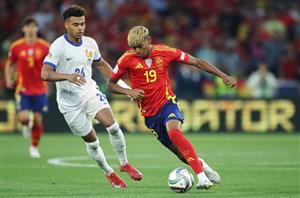
Spain gleefully accepted the invitation, using the central spacing of Rodri and Fabián Ruiz to stretch France before Lamine Yamal and Dani Olmo unleashed moments of individual genius.
That defeat appeared to have sparked a philosophical overhaul, with Deschamps transitioning from the slower 4-3-3 template to a dynamic 4-2-3-1 system.
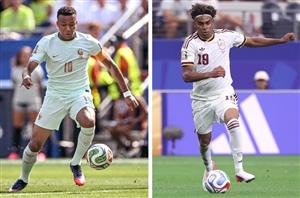
At the core of this tactical rebirth is Michael Olise, who has given France the creative link they desperately lacked following Antoine Griezmann’s international retirement.
The Bayern Munich playmaker enters Dallas leading the World Cup with six assists in as many matches, sitting just one shy of Pelé's all-time tournament record.
With Olise pulling the central strings, the explosive wide combination of Ousmane Dembélé, Désiré Doué and Kylian Mbappé have a solid supply channel.
Instead of hiding from Spain's possession, France now possesses the central quality to match it, proving their intent by brushing aside Morocco 2-0 in the quarter-finals.
Manu Koné vs. The Rodri Shield
With Real Madrid anchor Aurélien Tchouaméni battling a persistent adductor strain, Roma's Manu Koné has shouldered immense defensive responsibility alongside Adrien Rabiot.
While Koné brings explosive physical recovery metrics, he will face a masterful tactical test in Spain’s engine room.
Spain are expected to use Rodri and Fabian Ruiz to dictate the pace in midfield, actively trying to draw Koné out of the center circle.
The Roma man must maintain his positional discipline or risk opening up the exact passing lanes Lamine Yamal needs to cut inside and look for his signature long-range bending shots.
Cucurella vs. Dembélé
At Euro 2024, Spain's fullbacks pushed high to pin opponents wide. Against a revitalized French attack that scored freely on their way to the last four, Luis de la Fuente must tread with a little bit of caution.
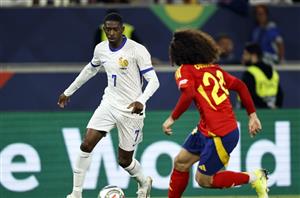
Marc Cucurella will be tasked with a highly conservative role on the left flank. Rather than overlapping Alex Baena, Cucurella must tuck inside to close down the space behind his shoulders.
By positionally parking Cucurella in Ousmane Dembélé’s favorite breakout lane, Spain will hope to force France into slower recycling cycles.
The Effects of the Fast-Paced Dallas Stadium Turf
The choice of Dallas Stadium as the venue for this semifinal clash between France and Spain could be a pivotal factor.
Operating under a climate-controlled dome, the pitch conditions will be flawless and devoid of the thick humidity or unpredictable winds that plagued outdoor coastal venues earlier in the tournament.
A slick, lightning-fast turf has proved perfect for Spain’s one-touch passing style over the years. However, it simultaneously plays like a rocket booster for France's direct transition game.
On a fast-track surface, the energy required by Spain’s center-backs to chase a sprinting Mbappé or Bradley Barcola becomes far more punishing.
This means any high-line positioning error from La Roja will result in an immediate 1v1.
Benches Could Prove Key
As the match enters the final twenty minutes, the focus will shift entirely to the bench depth, where Deschamps and De la Fuente hold two vastly different managerial philosophies.
Deschamps favors late-stage structural security, often waiting until the 75th minute to launch ball-carriers like Warren Zaïre-Emery or Youssouf Fofana to lock down a result.
In contrast, De La Fuente rotates his pieces early to maintain a relentless counter-press, utilizing the running power of Dani Olmo or Álex Baena.
The side that manages this final window without succumbing to fatigue under the dome will likely dictate who commands the final whistle.
Weighing the Myth against Current Reality
The idea that Spain is an absolute, psychological block for France is built on recent history, but football in 2026 moves at breakneck pace.
The experimental backlines and sluggish open-play style that doomed France in their previous encounters have been thoroughly ironed out.
Les Bleus arrive in Texas carrying an unblemished tournament record and a defense that has been nearly impossible to break down in open play.
French Football Federation president Philippe Diallo noted the calm confidence running through the camp, calling this a "golden age of French football" prepared for the biggest occasions.
If Spain expects the same toothless, reactive side they handled in Munich, they are in for a rude awakening.
This is an entirely fresh battle between La Roja’s unrivaled technical fluidity and a completely evolved French machine.
Spain may have provided the painful spark for France's modern reinvention, but Deschamps has the perfect structural platform to finally break this streak of bad results.

Related
Top Betting Sites
Betting offers
Upcoming Events
21 September 2026
- EMEA Masters 2026 Summer -
- Esports
24 September 2026
- VALORANT Champions 2026 -
- Esports
- EuroLeague 2026/27 -
- Basketball
03 October 2026
- 2026 Demacia Cup Global Invitational -
- Esports
Load More


