
How FIFA's minutes-per-goal tiebreaker gives Messi and Undav a hidden Golden Boot advantage

As the FIFA World Cup group stages conclude, the Golden Boot race is heating up, with Messi, Mbappé, Haaland, and Undav all close contenders. However, FIFA's strict tiebreaker rules, prioritizing goals, assists, and crucially, fewest minutes played, may mean that stars like Messi and Undav, if rested for their final group games, gain a statistical advantage. This approach has precedent from the 2010 tournament. The key takeaway: tactical squad management can be just as decisive as on-pitch brilliance for winning individual honors.
- Golden Boot awarded based on goals, assists, and minutes played if tied.
- Resting key players can improve their efficiency metric for the tiebreaker.
- Squad management may be as crucial as scoring in the 2026 Golden Boot race.
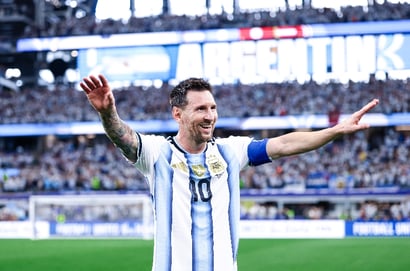
As the FIFA World Cup heads into the decisive round of the group stage finales, the early Golden Boot race appears to be drawing plenty of eyes and attention.
The current numbers seem to suggest an intense battle between the heavyweights.
Argentina’s Lionel Messi leads the line with 5 goals, closely followed by Kylian Mbappé and Erling Haaland on 4. Germany's breakout star Deniz Undav hovers dangerously behind on 3 goals and 2 assists.
Looking logically at the selection decisions, if a Golden Boot contender is benched or rested for Matchday 3, their individual campaign takes a hit, having missed a window to stat pad.
However, a deeper look into the official FIFA Golden Boot tiebreaker regulations reveals a massive flaw in this logic. Under the current criteria, being forced to sit out the final group fixture is not a death sentence for an individual trophy hunt.
In fact, due to the way FIFA calculates deadlocks, an evening on the bench could accidentally hand Messi and Undav the definitive, statistical shield they need to claim the award.
Understanding FIFA’s Tie-Breaker Rules
The modern World Cup no longer permits joint-winners for its top individual award.
If two or more players conclude the tournament level on total goals, FIFA filters the leaderboard through a strict, descending three-step calculation matrix to isolate a singular recipient: Goals scored, open play assists, fewest minutes played.
It is the final tier of this dynamic where the "Minutes-Per-Goal” metric becomes relevant.
If contenders finish deadlocked on both goals and assists following the final in July, the trophy does not go to the player who featured the most or carried the heaviest burden; it is awarded to the attacker who achieved their goal tally in the shortest amount of active on-pitch time.
How this New Rule Can be a Blueprint for Efficiency
This specific rule changes the tactical value of resting key players during heavily controlled group finales.
Let us examine the vastly contrasting workloads logged by the tournament's leading marksmen across the opening two matchdays.
Because Argentina has comfortably sealed progress in Group J, Lionel Scaloni has the luxury of resting Messi against Jordan. Similarly, Julian Nagelsmann can choose to protect Deniz Undav against the Ivory Coast following Germany's comfortable start.
By sitting out Matchday 3, Messi blocks his active minutes layout at a clean 170 minutes, while Undav preserves his mind-boggling 56-minute total.
Meanwhile, France and Norway are locked in a high-stakes, direct Group I seeding war and Neither manager can afford to bench their primary attacking weapons. As a result, Mbappé and Haaland are highly likely to log another grinding 90-minute shift.
Even if they score a goal each to draw level with Messi on 5, they will have increased their tournament playing time to a massive 270 minutes.
Looking Back at the 2010 Precedent
While this may look like a hypothetical precedent, it is in fact a direct tournament reality that has historically decided the fate of the award.
The most iconic deployment of this rule occurred at the 2010 World Cup, where Thomas Müller, David Villa, Wesley Sneijder, and Diego Forlán all finished deadlocked at the top of the charts with 5 goals apiece.
While Müller was handed the primary award due to his 3 assists, the secondary positions were decided strictly by active time on the grass.
Sneijder claimed the Silver Boot over Diego Forlán simply because he had logged two fewer minutes across the entire four-week tournament.
Squad Preservation Ultimately Proving Advantageous
Ultimately, the race for the 2026 Golden Boot will be shaped just as much by administrative squad management as it is by individual brilliance on the pitch.
While fans routinely clamor to see icons like Messi or breakout stars like Undav chase goals every single minute, their respective managers' choice to preserve their health is a major hidden advantage.
By locking their minutes-played metrics in place while their rivals expand theirs in exhausting group-stage finales, Messi and Undav may not necessarily be falling behind in the Golden Boot race.
They are actively building a highly efficient, mathematical shield that could secure them the world's most prestigious individual scoring honor without even getting on the pitch.
Top Betting Sites
Betting offers
Upcoming Events
10 June 2026
- Volleyball Nations League 2026 -
- Volleyball
11 June 2026
21 June 2026
Load More
Today's Acca Tips
-
Soccer tips
-
Horse Racing tips


