
The Players Carrying Their Nation's Goalscoring Hopes at The FIFA World Cup

The 2026 World Cup reveals a stark divide in attacking strategies. Teams such as Jordan, Uzbekistan, Qatar, Curaçao, and Scotland are heavily dependent on one key attacker for their goals and creative spark—unlike tournament giants that share scoring across the squad. This 'key-man' approach offers clarity and leadership but also creates vulnerability, as opponents can focus their defensive efforts on shutting down a single player. Success or failure may hinge on whether these stars can rise to the occasion during the tournament.
- Several teams depend on one player for nearly half their goals.
- This brings tactical focus but makes them predictable and vulnerable.
- In contrast, top teams share goal-scoring, reducing their risk.
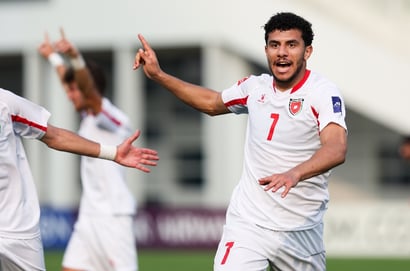
One of the clearest divides at the 2026 World Cup is how teams generate goals.
The strongest squads spread scoring responsibility across multiple players, making them difficult to predict and even harder to stop. Others rely heavily on a single attacking figure to provide goals, creativity and leadership in the final third.
The tournament data highlights five teams where that dependence is especially pronounced.
Jordan's Entire Attack Runs Through Sabra
No team relies more heavily on one player than Jordan. Ibrahim Sabra has scored 10 of the team's 20 goals, meaning he is responsible for exactly 50% of their total attacking output.
That level of concentration is extraordinary at World Cup level. Every Jordan performance is likely to be shaped by one central factor: whether Sabra can influence the game.
If he finds space and receives service, Jordan become dangerous. If opponents successfully isolate him, their attacking threat can diminish rapidly.
Uzbekistan's All-Purpose Match Winner
Uzbekistan face a similar situation with Eldor Shomurodov. He has contributed 23 of the team's 48 goals, accounting for 48% of their total output.
His importance extends beyond finishing, however, as he also leads the squad in penalty responsibilities and creative contributions.
In practical terms, Uzbekistan are heavily dependent on a player who functions as both their primary goalscorer and one of their main playmakers.
Afif Is Qatar's Creative Engine
Qatar's attack revolves around Akram Afif. His 13 goals represent 41% of the team's total of 32, while he also leads the squad in assists and key passes.
Few players at the tournament carry a greater share of their team's attacking workload. Afif is not simply the finisher of Qatar's moves. He is frequently the player who starts them, develops them and completes them.
For a team already among the lower-scoring sides in the competition, that level of reliance is impossible to ignore.
Curaçao's Dependence on Margaritha
Curaçao also lean heavily on one standout performer. Jearl Margaritha has scored 19 of the team's 54 goals, accounting for 35% of their attacking output. He also serves as the squad's primary creative force.
For a side with limited scoring depth, Margaritha's form could determine whether Curaçao become one of the tournament's surprise packages or struggle to create enough chances.
Scotland's Main Man
Scotland may be the strongest team among the nations on this list, which makes their profile particularly interesting.
Lawrence Shankland has scored 40 of Scotland's 135 goals, representing 30% of the team's total output. His penalty record of 14 conversions from 15 attempts further highlights how frequently Scotland's attacks end with him.
Unlike some of the other teams featured, Scotland possess more support around their star striker. Nevertheless, there remains a clear connection between Shankland's performances and Scotland's chances of success.
The Strengths of a Key-Man System
There are obvious advantages to building around one elite attacker. A clear focal point simplifies attacking patterns, provides leadership under pressure and gives teammates a reliable target when opportunities arise.
In tournament football, where margins are often slim, having one trusted match-winner can be a powerful asset.
For teams such as Jordan, Uzbekistan and Qatar, that clarity helps define their identity.
The Risks Are Just as Obvious
The downside is equally clear. Opponents know exactly where the danger lies. Defensive plans become simpler when there is one player to stop rather than several.
Injuries, suspensions, or even one outstanding defensive performance can quickly remove a team's most effective route to goal.
When so much attacking responsibility is concentrated in one player, there is little room for error.
The Contrast With the Tournament Giants
The difference becomes stark when compared to the deepest squads in the competition.
England have 15 players with at least five goals. Brazil have 16. Portugal also have 16, while France have 11.
Those teams can survive a quiet tournament from their leading striker because scoring responsibility is spread throughout the squad.
Jordan, Uzbekistan, Qatar, Curaçao and, to a lesser extent, Scotland do not enjoy that luxury.
One Question Will Define Their Tournament
These teams are fascinating precisely because they are so easy to understand. Their matches often revolve around a single question: can the player they rely on impose himself on the game?
If the answer is yes, they can become dangerous very quickly. If the answer is no, they can struggle for ideas and find goals hard to come by.
At World Cup 2026, few storylines will be more important than the performances of football's ultimate one-man attacks.
Top Betting Sites
Betting offers
Upcoming Events
28 March 2026
- LEC 2026 Spring -
- Esports
04 April 2026
23 May 2026
- LPL 2026 Split 2 Playoffs -
- Esports
- LEC 2026 Spring Playoffs -
- Esports
- LCS 2026 Spring Playoffs -
- Esports
Load More
Today's Acca Tips
-
Soccer tips
-
Horse Racing tips
-
Tennis tips


