
Why France and Norway might tactically prefer finishing second in World Cup Group I

France and Norway are set for a high-stakes Group I finale, both unbeaten and led by stars Mbappé and Haaland. However, the expanded 48-team World Cup bracket has flipped the script: finishing first could mean a tougher knockout route including early matchups with giants like Germany or Spain. Conversely, second place offers a potentially easier path with softer opposition and less risk of fatigue. Coaches may prioritize squad rotation and injury management over a relentless battle for first, making this clash as much strategic chess as sporting spectacle.
- Finishing second in Group I may offer an easier knockout path due to the new World Cup bracket.
- Top spot leads to an early clash with tournament powerhouses like Germany or Spain.
- Expect managers to focus on player rotation and injury avoidance rather than all-out attack.
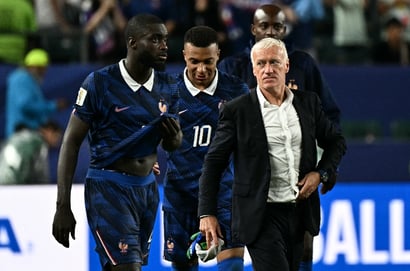
When France face Norway in their final Group I fixture, football fans across the globe will settle in for what is being described as a straight shootout for top spot.
Both teams have perfect 6 points from two games, while Kylian Mbappé and Erling Haaland are neck-and-neck with 4 goals apiece in the Golden Boot race.
While public opinion demands a fierce battle for the Group I crown, evaluating this clash through a standard, win-at-all-costs tournament lens completely ignores the dynamics of the expanded 48-team bracket.
Normally, finishing top of your group is always the ultimate objective, but the official pathways for the upcoming Round of 32 expose a hidden conundrum.
For the coaching staff of Didier Deschamps and Ståle Solbakken, claiming a narrow, second-place finish in Group I might actually offer the most calculated, low-fatigue route deep into the tournament.
The unique structural anomaly of Group I stems directly from how FIFA has pre-mapped the knockout grid for group winners versus runners-up.
Under the tournament's 32-team elimination matrix, the selection benefits of finishing first have fundamentally inverted.
The Winner’s Treacherous Route
The side that finishes top of Group I will be assigned to a match at the New York New Jersey Stadium.
While playing a third-placed team sounds easy on paper, the cross-group pairings mean they will draw a highly dangerous survivor from the tournament's elite brackets (Groups C, D, F, G, or H).
Worse yet, winning the group instantly funnels the victor into the hyper-congested left side of the bracket.
A victory in the Round of 32 puts the Group I winner on a direct collision course in the Round of 16 against Germany (the rampant four-time World Champions who thrashed Curaçao 7-1) or Spain.
A Less Dangerous Path for the Runners-Up
Conversely, the side that finishes second in Group I heads to Dallas Stadium for a round-of-32 opponent that could be softer on paper.
They will be drawn to face the runners-up of Group E, which is likely to be the Ivory Coast, who are in a solid position following their hard-fought opening win over Ecuador.
A second-place finish for either France or Norway completely bypasses the early-round European gauntlet.
A victory over the Group E runner-up slots the survivor into a remarkably volatile, wide-open section of the bracket where top-seeded giants are absent, opening a smoother path straight to the quarter-finals.
The Effect of this Theory on the Match-Day Selection
This administrative bracket reality creates an underlying paradox for the managers.
Neither Deschamps nor Solbakken can publicly instruct their squads of elite players to deliberately tank a game while Mbappé and Haaland are also fiercely competitive athletes driving for individual accolades.
The real tactical adjustments will happen through luxury load management. Knowing that a draw maintains the status quo and a narrow defeat is not a disaster, both managers can treat the second half at Boston Stadium as a low-risk experimental laboratory.
If the match is tied past the 60th minute, expect the rapid withdrawal of key playmakers to manage soft-tissue recovery timelines and erase any looming card accumulation risks.
Forcing a grueling, high-fatigue press late in the game in search of a winner may not be advisable when the reward for winning could be an immediate appointment with the tournament's big guns.
Why Both Teams Must Embrace the Long Game
Friday’s epic encounter in Boston between France and Norway will be a fascinating study in major-tournament chess.
While fans and television broadcasters demand an explosive, end-to-end shootout between Mbappé and Haaland, the managers may be looking at the tournament whiteboard rather than the scoreboard.
In the expanded 48-team format of the 2026 World Cup, raw momentum must be balanced with smart administrative detachment.
Finishing second in Group I is not a sign of weakness or a failure of ambition; it is a hidden reprieve designed to keep a team's physical tank filled for when the games matter most.
Top Betting Sites
Betting offers
Upcoming Events
10 June 2026
- Volleyball Nations League 2026 -
- Volleyball
11 June 2026
21 June 2026
Load More
Today's Acca Tips
-
Soccer tips
-
Horse Racing tips


