
Talking Cricket: Why the 2025 Asia Cup shows the format has to change

The article discusses India's continued dominance in the Asia Cup, with the 2025 edition further exposing the gulf between the top teams and associate nations. India's overwhelming success has led to questions about the tournament's structure, as current one-sided matches benefit neither fans nor developing teams. The author proposes a two-division system, where teams compete against others of similar skill, allowing both competitiveness at the top and developmental opportunities at the lower levels. This format aims to make every match meaningful, support associate nation growth, and maintain the prestige of the Asia Cup.
- India overwhelmingly dominates the Asia Cup and the competition is unbalanced.
- Proposed: Split tournament into two divisions to ensure fairer, more meaningful matches.
- Format change could boost associate nations' growth and competitive spirit.
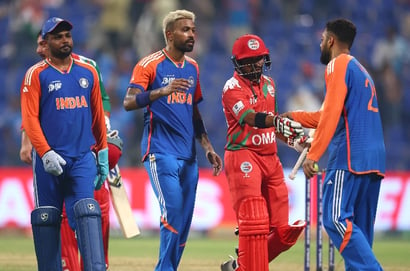
The 2025 Asia Cup has shown us one thing...that the format has to change. That's because once again we are questioning whether India should be part of a competition that has not really provided them with much jeopardy.
Currently sitting at the top of the ICC men’s rankings in both the ODI and T20 game, India have created a limited overs team that finished second at the 2023 ODI World Cup before winning the 2024 T20 World Cup.
In the UAE for this year's Asia Cup, the T20 world champions come face to face with a number of sides nowhere near the top of the world - it has shown. Are we essentially just biding time to hand the trophy over once again.
Things need to change.
Asia Cup Dominated By India
Since 1984, the Asia Cup has sought to crown the best men’s Asian side in the game of cricket. Currently being played in a biennial format, the Asia Cup has also had four-year, three-year and one-year gaps between iterations.
The tournament also hops between the Twenty20 format and the 50 over game, with each nation given every opportunity to flex their cricketing skills across the limited overs games.
While the tournament has seen several changes throughout the years, the one mainstay is India’s dominance. India arrived for the tournament in 2025 with eight titles to their name, and most would agree they are incredibly likely to secure a ninth this year.
If India are to win their ninth title in 2025, their win rate at the tournament would be over 50% in the 17 iterations of the competition. In this time, Pakistan have won twice, while Sri Lanka have won six times.
Sri Lanka’s own solid performance at the competition is worth noting, but they have hardly been prolific of late. Indeed, Sri Lanka have secured the title twice in the last seven tournaments, with Pakistan winning once and India winning the rest.
A real purple patch across 1997 to 2008 saw Sri Lanka win three tournaments and Pakistan win on title. Since then, things have been lean for Sri Lanka.
While the calibre of the likes of Afghanistan and Bangladesh have improved exponentially in recent years, the quality of Sri Lanka and Pakistan has slipped. The former have improved of late, but they are nowhere near the dominant sides of the past.
Meanwhile, Pakistan were easily beaten in their first clash with India at the tournament this year, and it does not look like the latter will allow much slack for the rest in the coming days.
The 2025 Asia Cup
As most had predicted, host the UAE and Oman were eliminated in the group-stage in 2025, while Hong Kong are also out. The big battle between Bangladesh and Afghanistan was ultimately won by the former as they beat the latter and took their place in the knockout stages.
It's all been a bit predictable otherwise. India hammered the UAE by nine wickets, needing just 27 deliveries to reach their total of 60/1. Then they humiliated Pakistan in a seven wicket win that highlighted the massive difference in class between the sides.
Aside from that result, Pakistan have also enjoyed easy wins over Oman (by 93 runs) and the UAE (by 41 runs). Sri Lanka’s four wicket win over Hong Kong was closer, but this was more likely a flash in the pan rather than a rule of thumb.
India are clearly far better than any side at the competition, with their wealth of riches shown through their dominance with bat and ball.
However, each of Pakistan, Sri Lanka, Afghanistan and Bangladesh are also far above the level of the UAE, Oman and Hong Kong. We've basically got teams playing at different levels.
World Cricket has had a real issue with helping associate nations to improve, with some citing a lack of game time against better teams, while others say they are exposed to the best too often.
Each of the three sides will have taken away valuable lessons from defeats to their more established opponents. However, humiliating defeats are counterintuitive to their continued development.
The Future of the Asia Cup
Perhaps the future of the Asia Cup is instead in two separate competitions.
A dual division competition would allow minnows to play against sides of a similar quality. While the UAE did handsomely beat Oman by 42 runs in their meeting, the sides shared over 300 runs in their meeting with both fully capable of notching the win.
In division two, bringing four or more nations of a similar quality together and giving them a tangible opportunity to win games, secure a trophy and play in pressure matches, means teams will only improve.
Alongside this, the top division could work in a similar way to most other competitions across the world. This would see the top two sides in division two not only battling for a trophy, but promotion too.
In the top division, the top teams would all fight for the trophy and the title of the best cricket team in Asia. The likelihood would be that India, Pakistan, Sri Lanka, Bangladesh and Afghanistan would be joined by one other side.
With a relegation spot and a potential relegation play-off against the winner of the second division, it would further expand the Asia Cup with more teams, more supporters and more cricket.
While expanding the Asia Cup in an already packed cricket calendar for many sides may be something of a logistical nightmare, India would have to play seven times to win the tournament this year.
By contrast, a six-team top division would see each side play the other five teams once, with two semi-finals and a final seeing the winner and runner-up play seven matches.
Changing the established order of things in sport can be difficult, but the rejuvenation of a tournament with new ideas and a format that befits the times better will only benefit the game in the long run.
Fans of teams outside of the top 10 are desperate to see their countries tangle with the best. For nations like Oman and Hong Kong, the idea of seeing their team hammered is not ideal, but having the opportunity to see greats of the game like Virat Kohli and Jasprit Bumrah on song is well worth the price of admission.
Despite this, the long-term competition of the game is something that cannot be ignored. Providing a competition that provides smaller teams with a chance to prove themselves against opponents of a similar quality will only see them improve.
While immediate relegation may then follow in the next campaign for the promoted side, each team will have something to aim for, whether that be a title, making a semi-final, avoiding relegation or promotion.
India’s dominance in a competition that now contains three cricket minnows is not something that will likely dissipate. In fact, the next generation of Indian talent looks to be potentially steering this Indian side to new heights.
If India are to beat the five beat Asian sides and secure the trophy in my proposed change to the competition, then few would begrudge them the trophy.
If this came with teams like the UAE and Hong Kong battling for promotion from division two while Pakistan or Bangladesh are embroiled in a relegation battle, it simply takes games that have little or no meaning and gives them an edge that some cricket competitions have really lacked.
Upcoming Events
10 June 2026
- Volleyball Nations League 2026 -
- Volleyball
11 June 2026
28 June 2026
Load More
Today's Acca Tips
-
Soccer tips
-
Horse Racing tips
-
Tennis tips


